
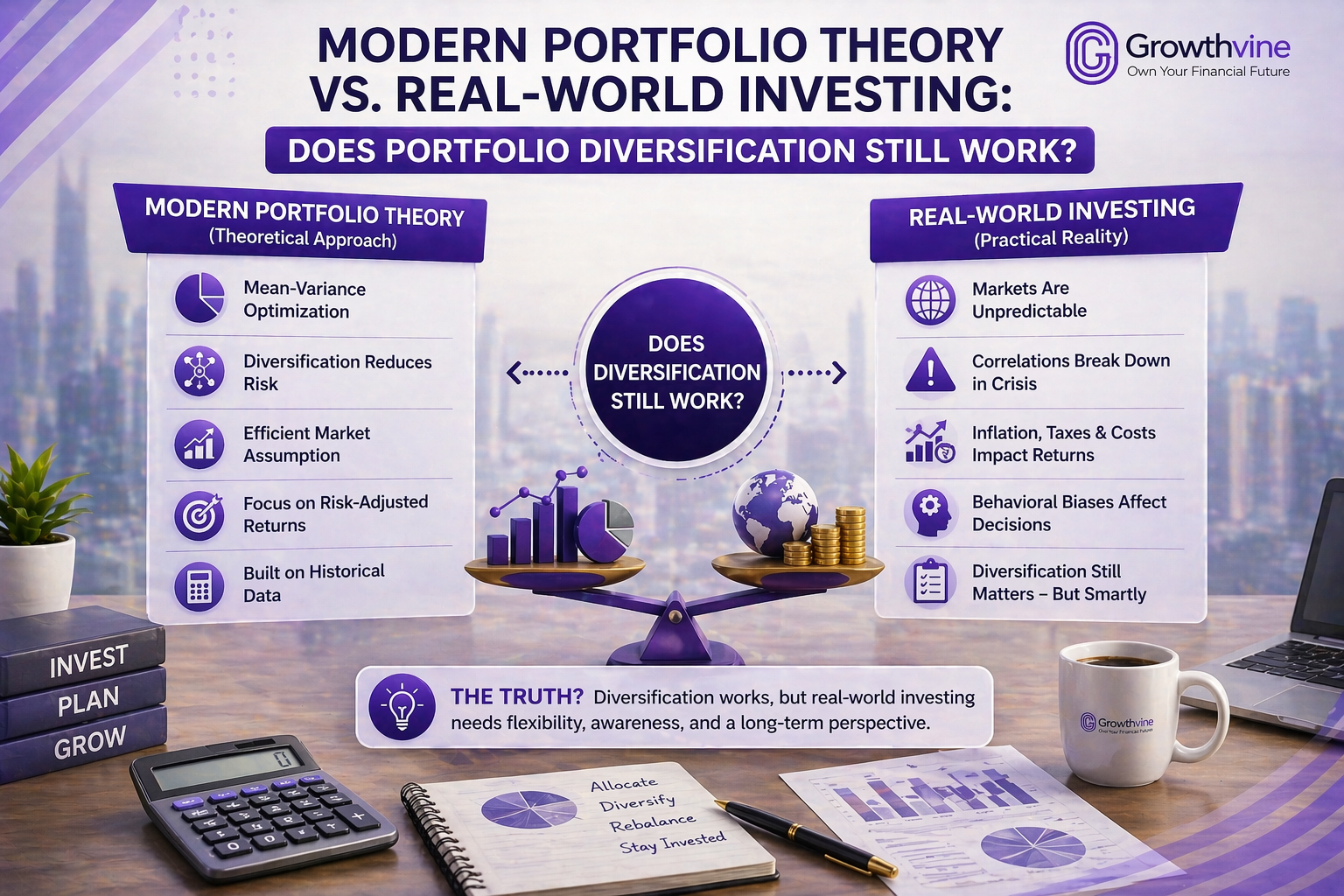
In the world of finance, one concept has stood the test of time—diversification. Rooted in Modern Portfolio Theory (MPT), diversification has long been promoted by every experienced investment advisor and financial advisor as the foundation of smart investing. But in today’s fast-changing markets, investors often ask a critical question: Does diversification still work in real-world investing?
Understanding Modern Portfolio Theory (MPT)
Modern Portfolio Theory, introduced by Harry Markowitz in 1952, is based on a simple but powerful idea: don’t put all your eggs in one basket.
According to MPT:
- Investors can reduce risk by spreading investments across different asset classes (stocks, bonds, etc.)
- The goal is to maximize returns for a given level of risk
- Portfolio performance depends on how assets correlate with each other
For example, if stocks fall but bonds rise, your losses are balanced. This mathematical approach became the backbone of portfolio construction for every professional financial advisor.
What Diversification Looks Like in Theory
In theory, diversification means:
- Investing in multiple sectors (technology, healthcare, finance)
- Allocating across asset classes (equity, debt, gold)
- Spreading investments geographically (domestic + international)
The idea is simple: uncorrelated assets reduce overall portfolio volatility.
The Reality of Real-World Investing
While MPT works beautifully on paper, real-world investing is far more complex.
1. Correlations Change in Crisis
During market crashes (like 2008 or COVID-19), assets that usually move differently often fall together. This reduces the effectiveness of diversification when it is needed most.
2. Market Behavior is Emotional
MPT assumes investors are rational. In reality, fear and greed drive decisions. Panic selling or overconfidence can disrupt even a well-diversified portfolio.
3. Over-Diversification Risk
Many investors end up owning too many assets, leading to “diworsification”—where returns get diluted without significantly reducing risk.
4. Globalization Effect
Today’s markets are more connected than ever. A global event can impact multiple asset classes simultaneously, reducing diversification benefits.
Does Diversification Still Work?
Yes—but with a modern approach.
Diversification is not dead; it has simply evolved. Instead of blindly spreading investments, today’s smart investment advisor focuses on strategic diversification.
Modern Diversification Strategies
1. Asset Allocation Still Matters
A balanced mix of:
- Equities (growth)
- Debt instruments (stability)
- Gold or alternatives (hedge)
remains essential.
2. Focus on Quality, Not Quantity
Instead of owning 50 stocks, a focused portfolio of high-quality assets often performs better.
3. Include Alternative Investments
Modern portfolios may include:
- REITs (Real Estate Investment Trusts)
- International funds
- ETFs
- Commodities
These add new dimensions to diversification.
4. Dynamic Rebalancing
Markets change, and so should your portfolio. Regular rebalancing ensures your asset allocation stays aligned with your goals.
Role of a Financial Advisor in Today’s Market
In today’s complex environment, diversification is no longer a DIY strategy. A skilled financial advisor helps:
- Identify the right asset mix
- Adjust strategies based on market conditions
- Avoid emotional investing mistakes
- Optimize returns while managing risk
Similarly, a professional investment advisor ensures your portfolio is aligned with your financial goals, risk appetite, and time horizon.
Growthvine’s Perspective on Diversification
At Growthvine, we believe that diversification is still a powerful tool—but only when applied intelligently.
We focus on:
- Personalized portfolio strategies
- Data-driven investment decisions
- Continuous monitoring and optimization
Our approach combines the principles of Modern Portfolio Theory with real-world market insights to create portfolios that are resilient, adaptive, and growth-oriented.
Final Thoughts
Diversification is not outdated—it is misunderstood. While traditional models may not fully capture today’s market complexities, the core idea remains relevant: spread risk to protect your investments.
However, success in modern investing lies in how you diversify, not just how much you diversify.
With the right strategy and expert guidance from firms like Growthvine, investors can navigate uncertainty and build portfolios that stand strong in both calm and turbulent markets.
If you’re looking to strengthen your portfolio with a smarter diversification strategy, now is the time to consult a trusted investment advisor and take control of your financial future.

CFA-certified investment advisor with 15+ years of experience at Morgan Stanley, BofA Merrill Lynch, and Fidelity. SEBI-registered advisor (INA000018665).