When you invest in mutual funds, earning returns is exciting—but understanding how those returns are taxed is equally important. One of the most common areas of confusion for investors is Short-Term Capital Gains tax (STCG).
At Growthvine, we believe that smart investing is not just about returns, but also about tax efficiency. Whether you’re working with a financial advisor near me, financial consultant, or financial planner, knowing how STCG works can help you make better financial decisions.
What is Short-Term Capital Gains (STCG)?
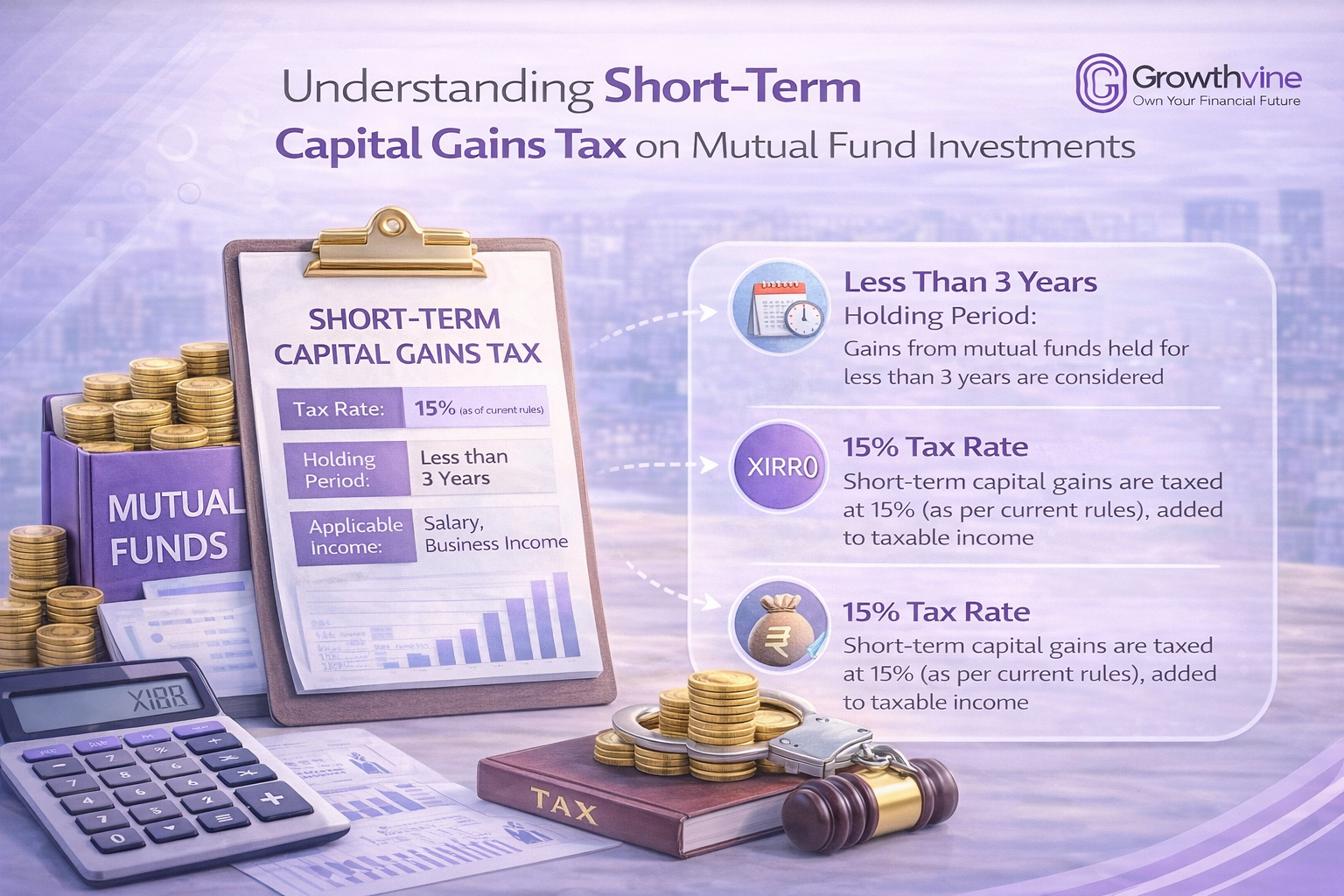
Short-Term Capital Gains refer to the profit earned when you sell your mutual fund investments within a short holding period.
Holding period rules:
- Equity Mutual Funds: Sold within 12 months → STCG
- Debt Mutual Funds: Sold within 36 months → STCG
If you sell your investments before these periods, the profit is classified as short-term capital gains and taxed accordingly.
How is STCG Taxed on Mutual Funds?
The taxation depends on the type of mutual fund.
1. Equity Mutual Funds
- STCG tax rate: 15% (plus applicable cess and surcharge)
Applicable when sold within 1 year
2. Debt Mutual Funds
- STCG is taxed as per your income tax slab
- Added to your total income
This difference makes tax planning extremely important.
A financial advisor at Growthvine can help you choose tax-efficient investment strategies based on your income bracket.
Example to Understand STCG
Let’s make it simple:
Example 1 (Equity Fund):
- Invested: ₹50,000
- Sold after 6 months: ₹60,000
- Profit: ₹10,000
STCG tax = 15% of ₹10,000 = ₹1,500
Example 2 (Debt Fund):
- Profit: ₹10,000
- If you fall under 20% tax slab → Tax = ₹2,000
As you can see, taxation differs significantly depending on the fund type.
Why Understanding STCG is Important
Ignoring taxes can reduce your actual returns.
Key reasons to understand STCG:
- Helps in better financial planning
- Avoids unexpected tax liabilities
- Improves net returns
- Enables smarter investment decisions
At Growthvine, every financial consultant ensures your investments are aligned with both growth and tax efficiency.
STCG vs LTCG: What’s the Difference?
| Feature | STCG | LTCG |
| Holding Period | Short | Long |
| Tax Rate (Equity) | 15% | 10% (above ₹1 lakh) |
| Tax Rate (Debt) | As per slab | Depends on rules |
| Benefit | Quick liquidity | Lower tax |
Holding investments longer often results in lower taxes, making long-term investing more beneficial.
How to Reduce STCG Tax on Mutual Funds
While taxes cannot be avoided completely, they can be managed smartly.
1. Hold Investments Longer
Avoid selling before the short-term period ends.
2. Plan Redemptions
Withdraw funds in a way that minimizes tax impact.
3. Use Tax-Efficient Funds
Choose funds that align with your financial goals.
4. Offset Gains with Losses
Use capital losses to reduce taxable gains.
A professional financial planner can help you implement these strategies effectively.
Common Mistakes Investors Make
Many investors unknowingly increase their tax burden.
Avoid these mistakes:
- Frequent buying and selling
- Ignoring holding period rules
- Not tracking gains properly
- Making emotional investment decisions
Working with a financial advisor ensures disciplined and tax-efficient investing.
Role of Growthvine in Tax Planning
At Growthvine, we go beyond just helping you invest—we help you optimize your returns.
Our approach includes:
- Tax-aware investment strategies
- Portfolio review and rebalancing
- Guidance from experienced financial consultants
- Long-term wealth planning support
We ensure that your investments are structured in a way that maximizes returns while minimizing tax liabilities.
When Should You Consult a Financial Expert?
You should seek guidance if:
- You actively invest in mutual funds
- You frequently redeem investments
- You want to reduce tax burden
- You are unsure about tax rules
An experienced financial planner can simplify complex tax concepts and help you make better decisions.
Final Thoughts
Short-Term Capital Gains tax is an essential aspect of mutual fund investing that every investor must understand. While earning returns is important, keeping more of those returns is equally crucial.
By understanding STCG, you can:
- Plan your investments better
- Avoid unnecessary taxes
- Improve overall returns
- Make informed financial decisions
With expert support from Growthvine’s team of financial advisors, financial consultants, and financial planners, you can build a tax-efficient and growth-oriented investment strategy.

CFA-certified investment advisor with 15+ years of experience at Morgan Stanley, BofA Merrill Lynch, and Fidelity. SEBI-registered advisor (INA000018665).