
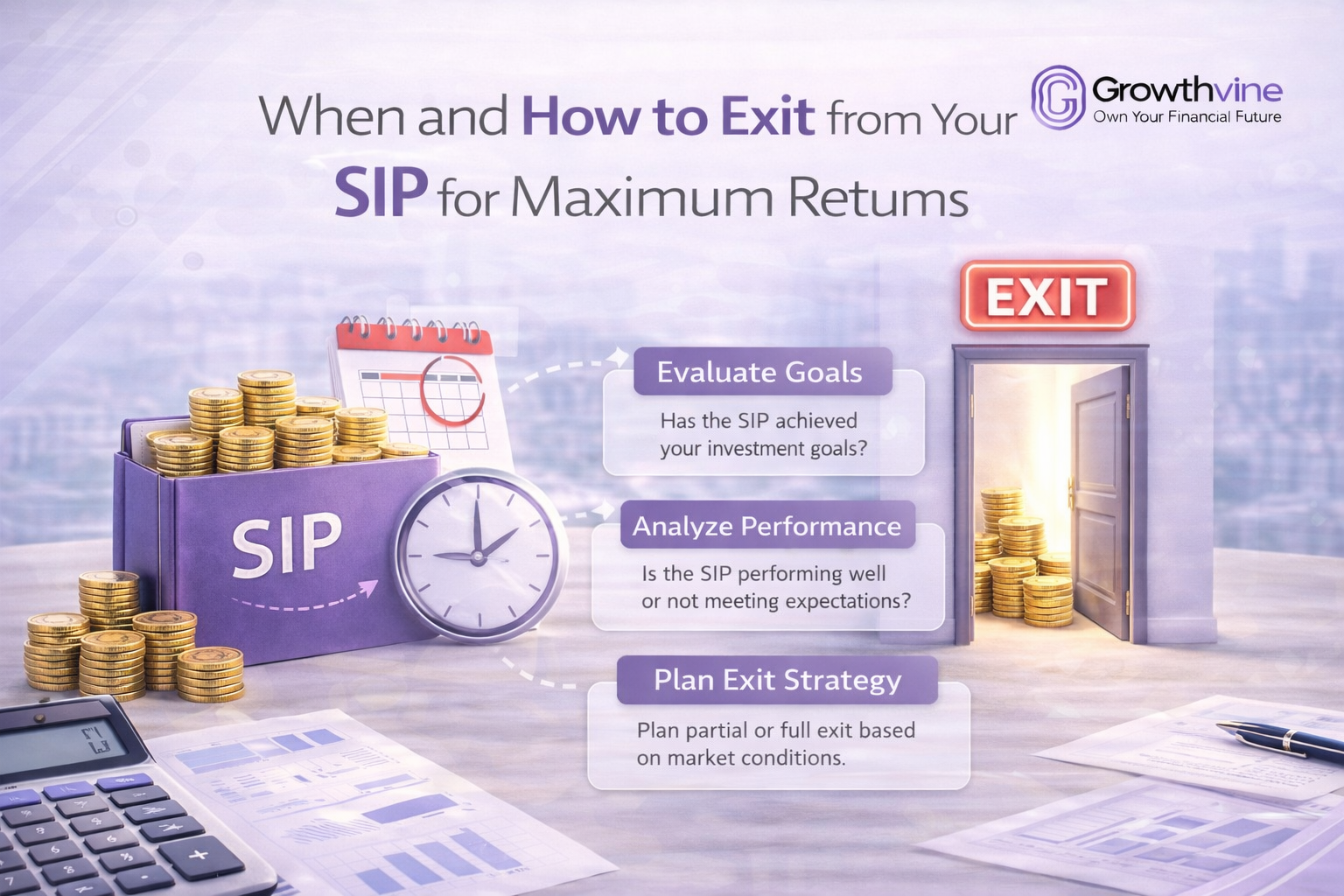
Systematic Investment Plans (SIPs) have become one of the most popular ways to invest in mutual funds. They allow investors to invest small amounts regularly while benefiting from market growth and the power of compounding. Many investors searching for the best SIP plans in India start their investment journey through SIPs because they are simple, disciplined, and suitable for long-term wealth creation.
However, while starting an SIP is easy, knowing when and how to exit your SIP is equally important. Exiting at the right time can help you maximize returns and achieve your financial goals effectively. Investors who understand the strategy behind SIP withdrawals are better positioned to get the most out of their SIP investment in India.
Understanding SIP Investments
Before discussing exit strategies, it’s important to understand how SIPs work. A SIP allows you to invest a fixed amount in a mutual fund at regular intervals, usually monthly. This approach helps investors benefit from rupee cost averaging and long-term compounding.
For example, if you invest ₹5,000 per month in a mutual fund through SIP for 10 years, you gradually accumulate units of the fund. Over time, as the market grows, the value of those units may increase significantly.
This is why many investors prefer SIPs when looking for the best SIP in India for long-term wealth creation.
When Should You Exit Your SIP?
There is no universal rule for exiting a SIP, but certain situations indicate that it may be the right time to withdraw or reduce your investment.
1. When You Achieve Your Financial Goal
The primary purpose of any investment is to achieve financial goals such as buying a house, funding a child’s education, or planning for retirement.
If your SIP was started with a specific goal in mind and you have reached the target amount, it may be a good time to exit or partially withdraw your investment.
For example, if you started a SIP to save for a car purchase in five years and your investment has grown enough to meet that goal, you may consider redeeming the fund.
Many investors searching for the best SIP plan for 5 years follow this goal-based investment strategy.
2. When the Fund Consistently Underperforms
Mutual funds are managed by fund managers and their performance may vary over time. If a fund consistently underperforms its benchmark and peer funds over several years, it may be wise to switch to a better-performing fund.
However, investors should avoid making decisions based on short-term market fluctuations.
When evaluating the best SIP plans in India, it is important to analyze long-term performance rather than reacting to temporary market volatility.
3. When Your Financial Goals Change
Life circumstances change over time. A change in income, family responsibilities, or financial priorities may require adjusting your investment strategy.
In such cases, you may need to partially or fully exit your SIP and reallocate your investments according to your new financial goals.
This flexibility is one of the advantages of SIP investment in India, as investors can adjust their investments as their financial situation evolves.
4. During Market Peaks (With Caution)
Some investors consider exiting SIP investments when the market reaches very high valuations. However, predicting market peaks is extremely difficult and risky.
Instead of exiting completely, many investors choose to gradually withdraw their investments through a systematic withdrawal plan (SWP) to manage market risk while maintaining steady returns.
How to Exit Your SIP the Right Way
Exiting your SIP requires careful planning to avoid unnecessary taxes and missed opportunities.
1. Avoid Panic Selling
Many investors panic during market downturns and redeem their SIP investments at a loss. However, SIPs are designed to benefit from market volatility through long-term investing.
Staying invested during temporary market corrections often leads to better long-term results.
2. Use Systematic Withdrawal Plans (SWP)
Instead of withdrawing the entire investment at once, investors can use SWP (Systematic Withdrawal Plan). This allows you to withdraw a fixed amount periodically while keeping the remaining investment in the fund.
This strategy helps investors maintain exposure to market growth while generating regular income.
3. Consider Tax Implications
Before exiting your SIP, it is important to understand the tax impact.
For equity mutual funds:
- Investments held for less than one year are subject to short-term capital gains tax.
- Investments held for more than one year are subject to long-term capital gains tax, with gains above ₹1 lakh taxed at 10%.
Planning your exit carefully can help minimize tax liability and maximize returns.
4. Rebalance Your Portfolio
Sometimes exiting a SIP is not about stopping investment entirely but about rebalancing your portfolio. Investors may shift funds from one scheme to another based on changing market conditions or financial goals.
This ensures that your investments remain aligned with your long-term strategy.
Common Mistakes to Avoid When Exiting SIP
While planning an exit, investors should avoid some common mistakes.
Stopping SIP during market corrections is one of the biggest mistakes. Market downturns often provide opportunities to accumulate units at lower prices.
Another mistake is exiting too early before compounding has had enough time to grow the investment.
Finally, investors should avoid chasing short-term performance when selecting the best SIP in India.
Why Long-Term SIP Investing Matters
SIP investing works best when investors stay disciplined and focused on long-term goals. The combination of regular investments, compounding, and market growth helps build substantial wealth over time.
This is why financial experts often recommend SIPs as one of the most effective ways to invest in mutual funds.
Investors looking for the best SIP plans in India often focus on diversified funds with strong long-term performance and consistent management.
How Growthvine Helps You Plan Your SIP Investments
At Growthvine, the focus is on helping investors build wealth through smart and disciplined investment strategies. The company provides expert guidance to help individuals choose the best SIP plans in India based on their financial goals and risk tolerance.
Whether you are looking for the best SIP in India, planning SIP investment in India for long-term financial goals, or searching for the best SIP plan for 5 years, Growthvine offers personalized financial planning solutions.
The team at Growthvine helps investors select suitable mutual funds, monitor performance, and create strategic exit plans to maximize returns.
Final Thoughts
SIP investments are one of the most effective ways to build long-term wealth, but knowing when and how to exit your SIP is equally important. Investors should base their exit decisions on financial goals, fund performance, and long-term investment strategies rather than short-term market movements.
By planning your SIP exit carefully, considering tax implications, and avoiding emotional decisions, you can maximize your investment returns and achieve your financial goals.
With the right guidance from financial experts like Growthvine , investors can confidently choose the best SIP plans in India, manage their SIP investment in India, and build a strong financial future.

CFA-certified investment advisor with 15+ years of experience at Morgan Stanley, BofA Merrill Lynch, and Fidelity. SEBI-registered advisor (INA000018665).