When evaluating investment performance, numbers can sometimes be misleading if you don’t know what they actually represent. Two commonly used metrics — XIRR and CAGR — often confuse investors. Both measure returns, but they serve different purposes and are used in different situations.
At Growthvine, we notice that investors rely on CAGR when they should be looking at XIRR instead. Understanding the difference can help you evaluate your investments more accurately and make better financial decisions with the help of a trusted financial advisor, experienced financial planner, or certified and experienced financial consultant.
What Is CAGR?
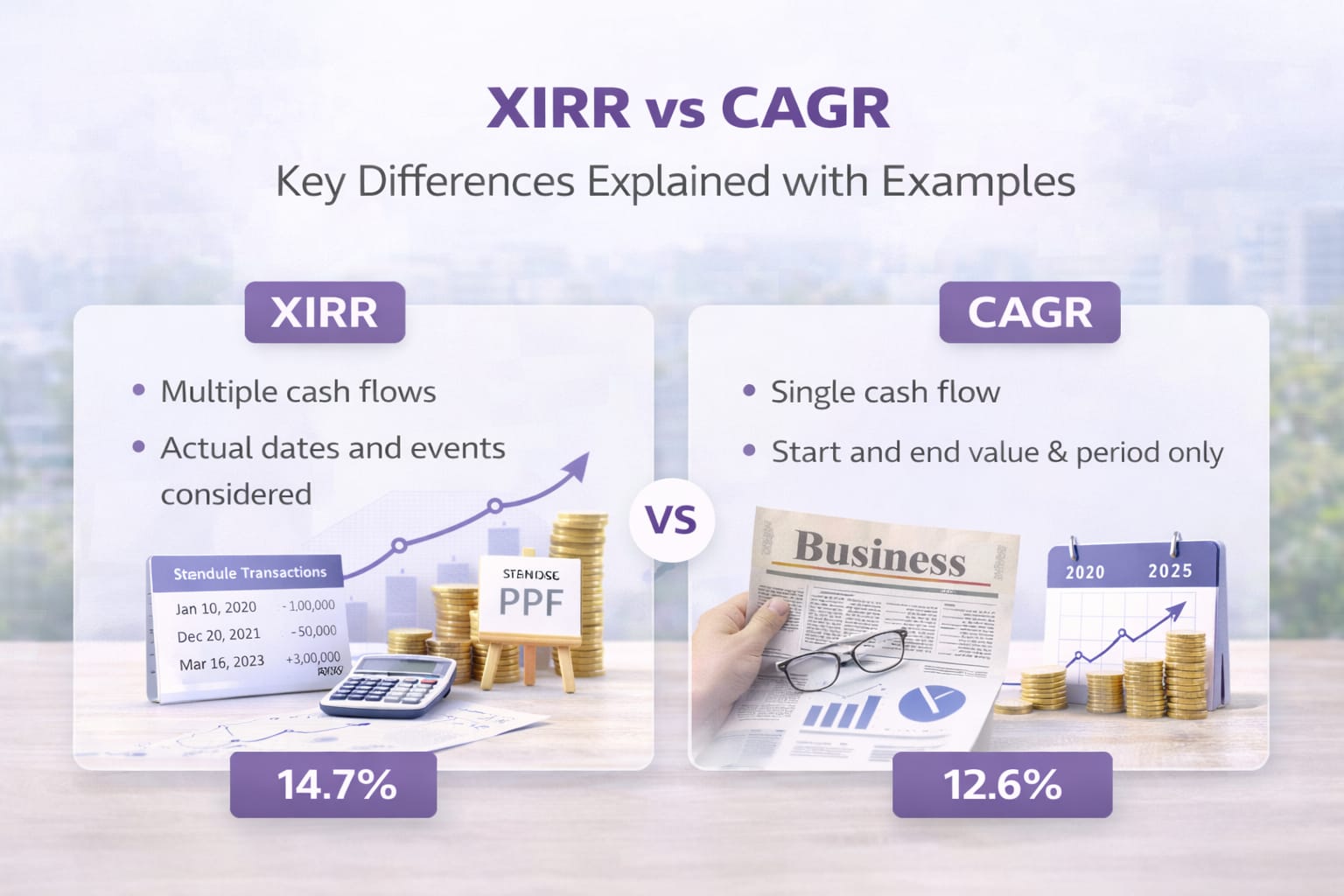
CAGR stands for Compound Annual Growth Rate. It shows the average annual return of an investment assuming the growth happened at a steady rate every year.
In simple words, CAGR answers this question:
“If my investment grew at a fixed rate each year, what would that rate be?”
It is commonly used for:
- Lump sum investments
- Fixed-term investments
- Comparing mutual funds or stocks
- Evaluating long-term growth
Example of CAGR
Suppose you invest ₹1,00,000 in a mutual fund, and after 5 years it becomes ₹1,60,000.
CAGR calculates the constant annual growth rate needed to reach that amount. In this case, your CAGR would be around 9.9% per year.
This makes CAGR useful for understanding how a single investment performed over time.
What Is XIRR?
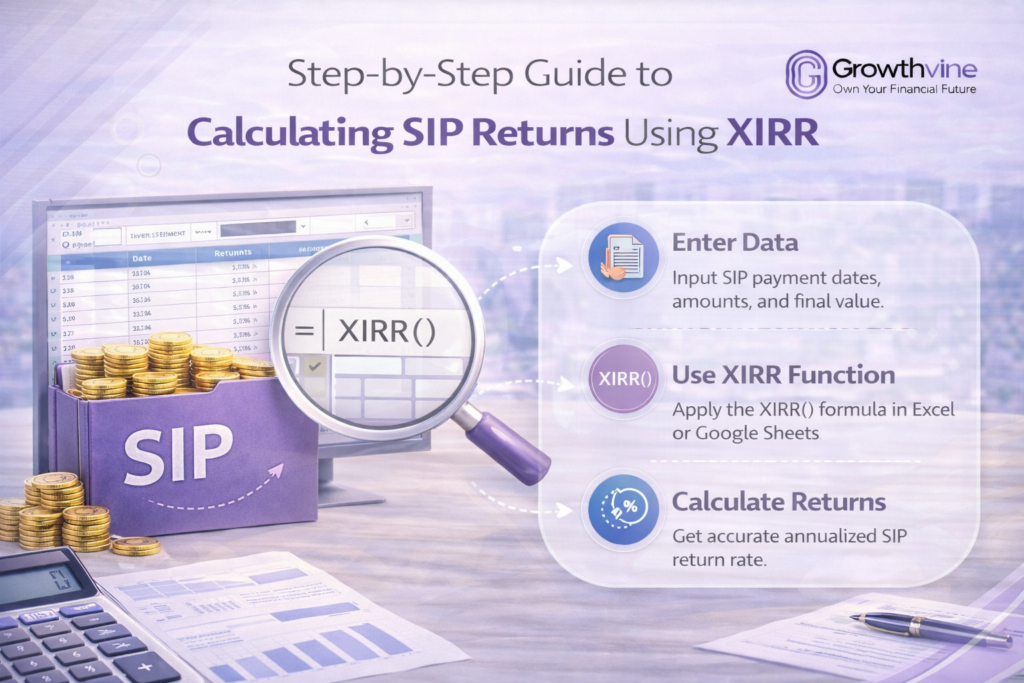
XIRR stands for Extended Internal Rate of Return. It measures returns when investments are made at multiple times and in different amounts.
This makes XIRR ideal for:
- SIP investments
- Portfolio tracking
- Irregular investments
- Cash flows with multiple dates
Unlike CAGR, XIRR considers the timing of each investment. This gives a more realistic picture of actual returns.
Example of XIRR
Let’s say you invest:
- ₹5,000 every month through SIP
- Continue for 3 years
- Your total investment becomes ₹1,80,000
- Current value of your portfolio is ₹2,40,000
Since the money was invested gradually, CAGR cannot measure returns accurately. XIRR calculates the effective return considering each investment date.
In this scenario, your XIRR may be around 12–13%, which reflects your true annualized return.
Most SIP investors track performance using XIRR instead of CAGR.
Key Differences Between CAGR and XIRR
- Type of Investment Considered
CAGR works best for one-time investments.
XIRR is ideal for multiple or periodic investments. - Cash Flow Timing
CAGR ignores when the money was invested.
XIRR accounts for each investment date. - Accuracy for SIPs
CAGR may give misleading results for SIPs.
XIRR gives a realistic performance measure. - Ease of Calculation
CAGR is simple to calculate manually.
XIRR is usually calculated using Excel or financial tools. - Real-Life Use
CAGR is good for comparing funds.
XIRR is better for tracking your actual portfolio.
A knowledgeable financial planner often explains both metrics to clients so they can understand investment performance without confusion.
When Should You Use CAGR?
Use CAGR when:
- You invested a lump sum
- There were no withdrawals or additional investments
- You want to compare investment options
- You want a simplified growth rate
CAGR is useful for understanding long-term growth trends, but it does not show the full story when investments are irregular.
When Should You Use XIRR?
Use XIRR when:
- You invest through SIP
- You make additional investments at different times
- You withdraw partially from investments
- You want to know your real portfolio return
Most investors today invest gradually, which makes XIRR a more practical performance metric.
That’s why a certified and experienced financial consultant like Growthvine uses XIRR when reviewing a client’s investment portfolio.
Why Understanding the Difference Matters
If you judge your SIP investments using CAGR, you may underestimate or overestimate your returns. This can lead to wrong decisions, such as exiting good investments or chasing unrealistic expectations.
Understanding XIRR helps you:
- Evaluate actual investment performance
- Compare portfolios realistically
- Make better long-term decisions
- Stay confident during market volatility
At Growthvine, we believe financial literacy is just as important as financial planning. Knowing how returns are calculated helps investors focus on long-term wealth creation rather than short-term fluctuations.
How Growthvine Helps Investors Track Real Returns
At Growthvine, our team of experienced professionals helps clients track investments using the right metrics. A dedicated financial advisor or skilled financial planner ensures:
- Accurate return calculations
- Portfolio performance monitoring
- Goal-based investment analysis
- Regular financial reviews
- Strategic rebalancing when needed
Our approach ensures you always know where you stand financially and what steps to take next.
Final Thoughts
Both CAGR and XIRR are useful tools, but they serve different purposes. CAGR shows how a single investment grew over time, while XIRR reveals the real returns of investments made across multiple dates.
For modern investors who invest through SIPs, top-ups, and phased investments, XIRR usually provides a more accurate picture.
If you want clarity in your investment performance and a strategy aligned with your goals, working with a trusted financial advisor, knowledgeable financial planner, or certified and experienced financial consultant can make all the difference.
At Growthvine, we help investors move beyond confusing numbers and focus on what truly matters — building sustainable wealth with confidence.
Because smart investing isn’t just about earning returns. It’s about understanding them.