
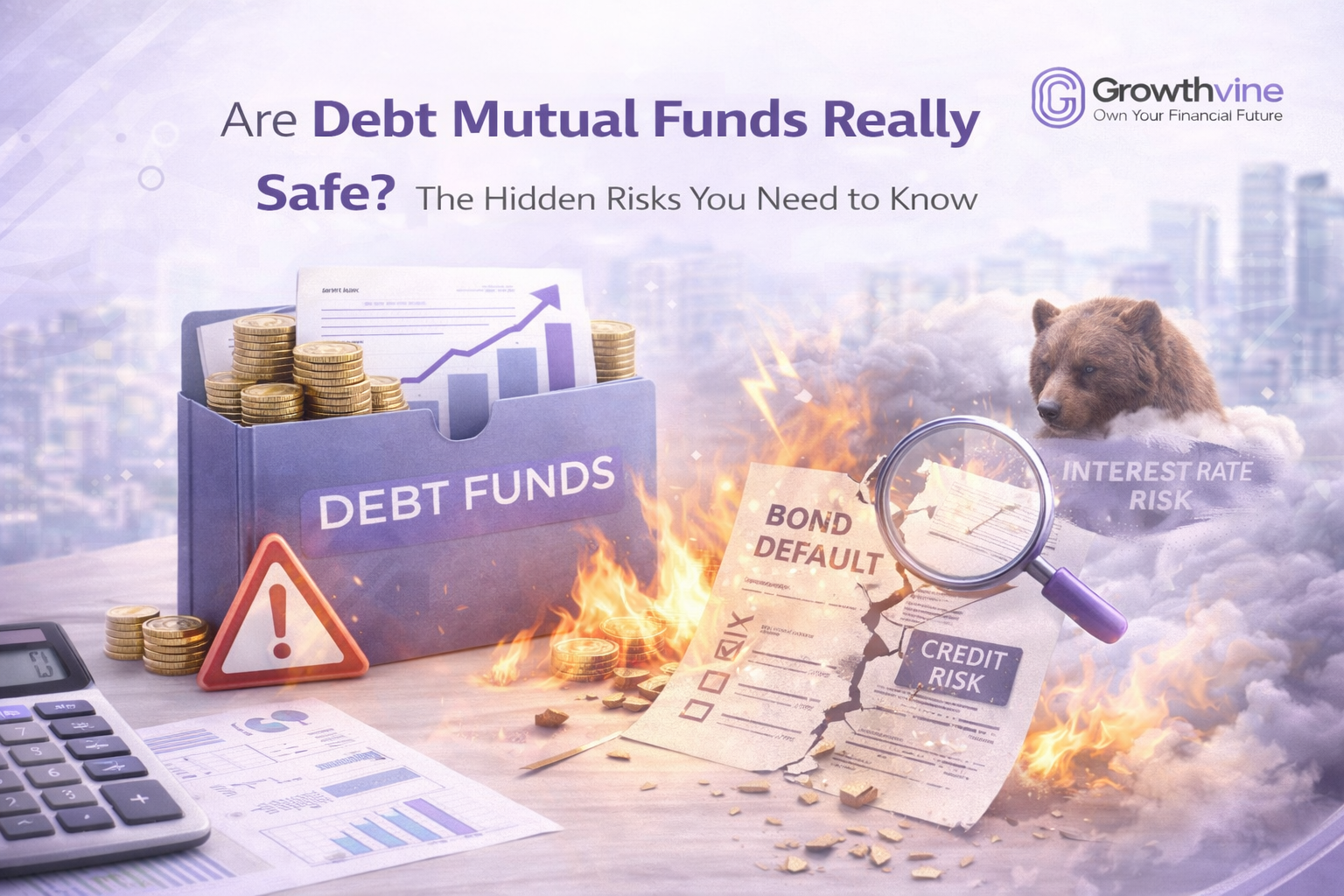
When people hear the word debt mutual fund, the first thing that comes to mind is safety. Many investors believe that debt funds are completely risk-free and work just like fixed deposits. But the reality is slightly different.
Yes, debt mutual funds are less risky than equity funds, but that doesn’t mean they are 100% safe. There are hidden risks that most investors don’t realize until something goes wrong.
In this blog, we’ll break everything down in simple words so you can clearly understand how debt mutual funds work, what risks are involved, and why taking advice from a mutual fund advisor, mutual fund planner, or mutual fund expert is important before investing.
What Exactly Are Debt Mutual Funds?
Debt mutual funds invest in fixed-income instruments such as:
- Government bonds
- Corporate bonds
- Treasury bills
- Commercial papers
- Certificates of deposit
These instruments pay interest, which becomes the return for investors. Because of this, debt funds are often considered suitable for people who want stable returns with lower risk.
A mutual fund consultant usually recommends debt funds to:
- Conservative investors
- People with short-term goals
- Investors who want regular income
- Those looking to balance risk in their portfolio
But here’s the truth — low risk does not mean zero risk.
The Biggest Myth: “Debt Mutual Funds Are Completely Safe”
This is the most common misunderstanding.
Unlike fixed deposits, debt mutual funds:
Do not offer guaranteed returns
Can lose value
Are affected by market conditions
Many investors realize this only when their fund’s NAV suddenly drops.
Let’s look at the hidden risks one by one.
Credit Risk – The Risk Most People Ignore
Credit risk means the chance that the company or institution issuing the bond may fail to repay money.
Some debt funds invest in low-rated corporate bonds to earn higher returns. If that company faces financial trouble or defaults, the fund’s value can fall sharply.
This has happened in the past with well-known companies, where investors saw sudden losses even in debt funds.
This is why a mutual fund expert always checks the credit quality before suggesting any fund.
Liquidity Risk – Not Easy to Exit Always
Some debt funds invest in instruments that are not easy to sell quickly.
In times of market stress:
- Many investors try to withdraw at once
- The fund may struggle to sell bonds
- NAV can fall sharply
- In rare cases, withdrawals may be restricted
This is why blindly investing without advice can be risky.
Returns Are Not Fixed Like FD
Many people invest in debt funds thinking they will get fixed returns like a bank FD. That’s not true.
Debt mutual fund returns:
- Change with market conditions
- Depend on interest rate movement
- Depend on the quality of bonds
Sometimes returns may be lower than expected, especially in rising interest rate scenarios.
A good online mutual fund advisor helps you choose the right type of debt fund based on your time horizon and risk level.
Taxation Can Reduce Your Profit
Earlier, debt mutual funds were very tax-efficient. But now, most debt funds are taxed as per your income slab.
This means:
- If you are in a higher tax bracket
- Your post-tax returns may reduce significantly
That’s why tax planning with a mutual fund consultant is very important before investing.
When Are Debt Mutual Funds Actually a Good Choice?
Debt mutual funds make sense when:
You want better returns than savings accounts
Your investment horizon is 6 months to 3 years
You want diversification in your portfolio
You are okay with mild fluctuations
You invest based on expert advice
They are ideal for:
- Emergency fund parking
- Short-term goals
- Conservative investors
- Portfolio balancing
How to Reduce Risk in Debt Mutual Funds
Here’s how a mutual fund consultant minimizes risk:
Choose High-Quality Funds
Prefer funds with AAA or government securities.
Match Duration with Goal
Short-term goals → Short-duration funds Long-term goals → Dynamic or gilt funds
Avoid Chasing High Returns
Higher return = higher risk in debt funds.
Diversify
Don’t put all money in one fund.
Take Expert Advice
A professional mutual fund planner can analyze:
- Credit quality
- Interest rate cycle
- Your financial goals
Role of a Mutual Fund Advisor
A certified mutual fund advisor or mutual fund expert helps you:
Select safe debt funds
Avoid risky credit exposure
Balance risk and return
Plan taxes efficiently
Build long-term wealth
With online access today, an online mutual fund advisor can guide you from anywhere, track your portfolio, and make changes as per market conditions.
Final thought :
If you want stable returns with controlled risk, always consult a mutual fund expert or mutual fund planner before investing. The right advice can protect your money and help you grow wealth steadily.

CFA-certified investment advisor with 15+ years of experience at Morgan Stanley, BofA Merrill Lynch, and Fidelity. SEBI-registered advisor (INA000018665).